



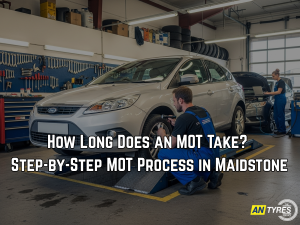
MOT day can feel a little stressful for many drivers, but understanding what happens and how long it takes can make the experience much smoother. Most MOTs take around 45 to 60 minutes, though this can vary depending on your car’s age, condition, and whether any issues are identified during the inspection.
At AN Tyres Maidstone, our certified testers begin by checking your vehicle documents, including registration and any previous MOT certificates. The inspection then covers all key areas to ensure your car is safe and roadworthy, from lights, mirrors, and bodywork to under-the-bonnet components such as fluid levels, the battery, and engine parts.
Preparing your car beforehand, checking lights, tyres, wipers, and fluid levels, can make the process faster and help avoid minor issues causing a fail, giving you peace of mind on the road. In this blog, we will walk you through the MOT timeline, including how long it takes and what the test involves, giving you a comprehensive insight into the MOT process.
What Is an MOT?
The MOT, short for Ministry of Transport test, is a legal requirement for all cars over three years old in the UK. Its purpose is simple: ensure every vehicle on the road is safe, roadworthy, and environmentally compliant. While it might seem like a quick check, the MOT is a detailed inspection covering brakes, tyres, lights, emissions, and much more.
At AN Tyres Maidstone, the team sees drivers regularly surprised at how thorough the test is, but once you know the process, it becomes straightforward and predictable.
Step-by-Step MOT Process
Breaking down the MOT step by step helps drivers understand why it takes around 45 to 60 minutes. Each stage has a clear purpose, and most minor issues can be addressed quickly to keep your test on track.
Pre-Test Setup – 5 Minutes
When your car arrives, the tester logs your details into the DVSA system and checks your registration. This stage includes a quick visual check for obvious issues such as fuel leaks, missing parts, or major damage. Getting these basics right ensures the test starts smoothly.
Lights, Horn, and Electricals – 5 to 7 Minutes
All external lights are examined, including headlights, indicators, brake lights, fog lights, and number plate illumination. The horn is tested, too. Blown bulbs are one of the most common reasons for failures, but they can usually be replaced immediately.
Tyres and Wheels – 7 to 10 Minutes
Tyres are checked for tread depth, overall condition, and size compliance. The legal minimum tread depth in the UK is 1.6 millimetres across the central three-quarters of the tyre. Inspecting wheel alignment and checking for cracks or bulges also falls under this stage.
Brakes and Suspension – 10 to 15 Minutes
The brakes are examined on a roller test machine to measure efficiency and balance between wheels. The suspension system, including shock absorbers, springs, and joints, is also inspected. This part of the MOT is one of the longest because accuracy is critical for safety.
Steering and Visibility – 5 Minutes
Inside the cabin, the tester checks steering responsiveness, mirrors, wipers, washers, and windscreen condition. Chips or cracks in the windscreen and poorly functioning wipers are common causes for advisories or minor failures.
Body, Chassis, and Structure – 5 to 7 Minutes
The car’s bodywork and chassis are checked for corrosion, sharp edges, or structural faults. Any damage that could affect safety is noted, and repairs may be recommended.
Exhaust and Emissions – 10 to 15 Minutes
Emissions are measured using specialised equipment. Petrol and diesel cars have strict limits for carbon monoxide, hydrocarbons, and smoke. The engine may need to reach operating temperature to ensure accurate readings, which can slightly lengthen this stage.
Final Checks and Report – 5 to 7 Minutes
Once all inspections are complete, the tester reviews the results and uploads them to the DVSA system. A successful MOT results in a certificate, while any faults are listed on a VT30 failure sheet. Minor repairs can be fixed immediately to allow a partial retest if needed.
Total MOT Duration: Roughly 45 to 60 minutes for most standard passenger vehicles.
Why Some MOTs Take Longer?
Several factors can extend the test slightly beyond an hour:
- Older vehicles or vans may have additional checks
- Vehicles with pre-existing issues require more time for retesting.
- Diesel cars sometimes need longer for emissions measurements.
- Busy periods can cause short waiting times in the garage.
Even with these variables, a well-maintained car usually completes the MOT within the standard timeframe.
How To Prepare Your Car for a Smooth MOT
A few simple checks before your MOT can save time and prevent a fail:
| Check | What to Do | Notes / Tips |
| Lights | Test all lights and replace any faulty bulbs | Common cause of MOT failures; easy to fix at home |
| Tyres | Check tread depth and overall condition | Legal minimum tread depth: 1.6mm across central 3/4 of tyre |
| Fluids | Top up washer fluid, engine oil, and brake fluid | Prevents advisories and minor failures during the MOT |
| Windscreen & Number Plates | Clean windscreen and number plates | Ensures visibility and compliance |
| Brakes & Suspension | Listen for unusual noises | Early detection helps avoid failures and retests |
MOT Retests and Waiting Time
If your car fails an MOT, you will receive a detailed failure sheet. Repairs can be done at the same garage or elsewhere. Returning within ten working days to the same MOT centre allows for a partial retest, which usually takes 20 to 30 minutes, as only the repaired components are inspected.
Why Regular Maintenance Helps
Cars maintained between MOTs almost always pass on the first attempt. Servicing brakes, tyres, and fluids throughout the year reduces wear, preventing last-minute failures. Regular maintenance also protects your car’s value and ensures safety for every journey.
Drivers in Maidstone often benefit from a mid-year check to catch early wear from town driving or uneven roads. AN Tyres Maidstone offers pre-MOT inspections and advice to keep vehicles on the road and fully compliant.
Conclusion
Understanding the MOT process and expected timings removes much of the anxiety surrounding the test. For standard vehicles, the test usually lasts 45 to 60 minutes, with each stage carefully inspecting key safety components.
Regular checks and maintenance help cars pass without hassle, and any minor repairs can be addressed quickly, keeping your car roadworthy and safe.
At AN Tyres Maidstone, MOTs are handled efficiently by experienced testers who ensure every vehicle meets legal standards. Drivers can expect a smooth, reliable process with clear guidance on any advisories.
Book your MOT online with AN Tyres Maidstone or arrange a pre-MOT inspection to keep your car safe and compliant.
FAQs
1 How often does my car need an MOT?
Cars in the UK must have an MOT once they are three years old and every year after that. The test checks that your vehicle meets legal safety and environmental standards. Keeping track of your MOT due date helps avoid fines and ensures your car stays roadworthy.
2 Can I drive my car if the MOT has expired?
It is illegal to drive a car on public roads without a valid MOT certificate unless you are travelling to a pre-booked MOT test. Driving without an MOT can lead to fines, points on your licence, or invalid insurance coverage.
3 What happens if my car fails the MOT?
If your vehicle fails, you will receive a VT30 failure sheet listing the faults. Minor issues can sometimes be fixed immediately for a partial retest, which usually takes 20 to 30 minutes. At AN Tyres Maidstone, technicians help guide you through any necessary repairs.
4 How long should I expect to wait for an MOT result?
Most MOTs take around 45 to 60 minutes, depending on the car’s condition. Once the test is complete, the result is updated instantly in the DVSA system, and you receive your certificate or failure sheet immediately.