

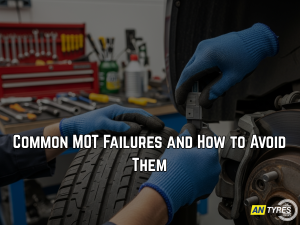
Wondering what the most common MOT failures are and how to steer clear of them? In most cases, vehicles fail their MOT due to simple, preventable issues such as faulty lights, worn tyres, damaged windscreen wipers, or low brake efficiency. Many of these problems can be spotted and fixed before the test with a quick pre-MOT inspection.
Every year, thousands of cars in the UK fail their MOT test, often for small, avoidable reasons. The MOT (Ministry of Transport) test ensures vehicles meet legal safety and environmental standards, yet research shows that more than a quarter of cars fail on the first attempt. The majority of these failures stem from simple maintenance issues that could be easily spotted at home.
If your MOT is due soon, understanding what typically causes failures can help you prepare properly, save money, and avoid the stress of a retest. Let’s explore the most common MOT failures and how you can prevent them, and why booking with AN Tyres makes passing even easier.
What Causes MOT Failures?
An MOT covers every element that affects road safety, from tyres and brakes to lights, steering, suspension, and emissions. Failures usually occur because specific components fall below the legal standard. The most frequent culprits are lighting faults, worn tyres, weak brakes, suspension wear, and visibility issues like cracked windshields or worn wipers.
While these may sound serious, most can be fixed quickly before your test day if you know what to check.
1. Lighting and Electrical Issues
Lighting faults are the most common reason for MOT failure in the UK. A single faulty bulb, dim headlight, or broken indicator can result in an automatic fail.
Common causes:
- Blown or mismatched bulbs
- Headlights not aligned correctly
- Non-functioning indicators or brake lights
- Number plate lights are not working
How to avoid it:
Before your test, turn on your headlights, sidelights, brake lights, fog lights, and indicators. Ask someone to stand outside while you test each one. Replace any blown bulbs immediately, and make sure headlights are level and evenly bright. Checking your lights takes just a few minutes but prevents one of the easiest avoidable MOT fails.
2. Suspension Wear
Suspension problems come second in the list of MOT failures. Because suspension parts wear gradually, many drivers overlook issues until the MOT test.
Warning signs:
- Clunking or knocking noises when driving over bumps
- Uneven tyre wear
- Vehicle pulls to one side
- Excessive bounce after pressing down on the bonnet or boot
How to avoid it:
If you notice any of these signs, book a suspension check before your MOT. A technician can examine shock absorbers, springs, and suspension joints for leaks or wear. Catching minor issues early can prevent costly repairs later.
3. Brake Problems
Brakes are critical to safety, and even slight inefficiency can fail the MOT. Common faults include worn brake pads, corroded discs, or weak handbrake performance.
What to look out for:
- Squealing or grinding noises when braking
- Steering pulls during braking
- Excessive pedal travel or a spongy feel
- The handbrake lever is lifting too high
How to avoid it:
Perform simple driveway checks, pull the handbrake on a slope, and see if it holds the car firmly. If not, it may need adjustment. Regular servicing ensures brake pads and discs are kept in top condition.
4. Tyres
Tyres account for a large number of MOT failures each year. The legal tread depth is 1.6mm, but anything below 3mm significantly reduces grip and increases braking distance.
What to check:
- Tread depth using the 20p test (the outer band should disappear into the tread)
- Cracks, bulges, or visible cords
- Tyre pressure according to your vehicle handbook
- Matching tyre types across the same axle
How to avoid it:
Check your tyres every few weeks and before your MOT. If you spot uneven wear, it might indicate alignment or suspension issues. Replacing tyres before they drop below the legal limit will ensure your car passes the MOT and stays safe on wet roads.
5. Visibility Issues
Your view of the road is essential for safety and for your MOT. Cars can fail for something as small as a worn wiper blade or low washer fluid.
Typical visibility problems:
- Wiper blades leaving streaks or not clearing the screen properly
- Cracked or chipped windscreen in the driver’s field of view
- Washer jets are not spraying correctly
- Stickers or items obstructing the windscreen
How to avoid it:
Top up screenwash, clean both sides of your windscreen, and replace worn wiper blades. If you have a chip larger than 10mm within the driver’s view, or 40mm elsewhere, get it repaired before the test.
6. Exhaust and Emissions Failures
Excessive exhaust noise, leaks, or smoke can lead to an MOT failure. Cars with faulty catalytic converters or diesel particulate filters (DPFs) are also at risk.
Signs of an issue:
- Louder exhaust than usual
- Rattling sounds from underneath the car
- Warning lights for emissions or DPF
- Strong fuel smell or visible smoke
How to avoid it:
Listen for any unusual exhaust noises and check under the car for leaks. A pre-MOT emissions test can identify problems early. Regularly servicing your car helps maintain engine and exhaust health.
7. Number Plates and Vehicle Identification
Illegible or damaged number plates are among the simplest MOT failures. Plates must be clean, unbroken, and meet spacing and font regulations.
How to avoid it:
Wipe plates before the test and replace them if cracked or faded. Also, ensure your VIN (Vehicle Identification Number) is visible on the dashboard or door pillar.
8. Seatbelts and Safety Restraints
Seatbelts are checked for proper function and condition. Frayed webbing, broken buckles, or a faulty locking mechanism will cause a fail.
How to avoid it:
Inspect all seatbelts by fully extending them, checking for cuts, and ensuring they lock under tension. If any warning lights are showing for airbags or seatbelt pretensioners, have them checked before your MOT.
9. Bodywork and Structure
While cosmetic damage doesn’t matter, any corrosion or sharp edges on the car’s body that could injure pedestrians or compromise structural integrity can fail the test.
How to avoid it:
Inspect sills, doors, and wheel arches for rust or holes. Deal with any corrosion early, welding and repairs can become costly if left too long.
10. Fluids and General Maintenance
Low fluid levels might not always cause a direct fail, but they indicate poor maintenance and can lead to advisories or more serious problems later.
Check before the MOT:
- Engine oil level
- Brake fluid level
- Coolant and screenwash
Top them up as needed and clear any dashboard warning lights before your appointment.
Simple Pre-MOT Checklist
Perform these checks a few days before your MOT to avoid failure:
- All lights work (including brake, fog, and number plate lights)
- Tyre tread above 1.6mm and no damage
- Windscreen free of cracks and chips
- Wipers and washer fluid working
- Number plates are clean and secure
- Seatbelts fully operational
- Horn sounds correct
- Handbrake holds firmly
- No dashboard warning lights
Completing this 10-minute routine could save you from a failed test and retest fee.
Why Prevention Matters?
A failed MOT not only costs extra but also means you can’t legally drive your vehicle until repairs are complete. Proactive maintenance ensures safety, saves money, and protects resale value. Most importantly, it keeps you compliant with UK road laws.
Conclusion
Passing your MOT shouldn’t be stressful or unpredictable. Most failures stem from small, simple faults, the kind you can catch with regular checks. By inspecting your lights, tyres, brakes, and visibility, you dramatically improve your chances of a first-time pass.
Book your MOT with AN Tyres today and drive with complete confidence. A little preparation goes a long way toward keeping you safe, compliant, and worry-free on the road.